<?xml version="1.0" encoding="UTF-8"?>
<rss version="2.0"
	xmlns:content="http://purl.org/rss/1.0/modules/content/"
	xmlns:wfw="http://wellformedweb.org/CommentAPI/"
	xmlns:dc="http://purl.org/dc/elements/1.1/"
	xmlns:atom="http://www.w3.org/2005/Atom"
	xmlns:media="http://search.yahoo.com/mrss/">

<channel>
	<title>DFID Bloggers</title>
	<atom:link href="http://blogs.dfid.gov.uk/feed/" rel="self" type="application/rss+xml" />
	<link>http://blogs.dfid.gov.uk</link>
	<description>Tales from the front line of our work to eradicate poverty worldwide.</description>
	<pubDate>Mon, 29 Jun 2009 12:25:24 +0000</pubDate>
	<generator>http://wordpress.org/?v=2.6.5</generator>
	<language>en</language>
			<item>
		<title>It&#8217;s (also) Grim Up North</title>
		<link>http://blogs.dfid.gov.uk/2009/06/its-also-grim-up-north/</link>
		<comments>http://blogs.dfid.gov.uk/2009/06/its-also-grim-up-north/#comments</comments>
		<pubDate>Mon, 29 Jun 2009 12:25:24 +0000</pubDate>
		<dc:creator>Ian Attfield</dc:creator>
		
		<category><![CDATA[DFID Nigeria]]></category>

		<category><![CDATA[education]]></category>

		<category><![CDATA[Kano]]></category>

		<category><![CDATA[poverty reduction]]></category>

		<guid isPermaLink="false">http://blogs.dfid.gov.uk/?p=2242</guid>
		<description><![CDATA[Apologies for not writing recently, in particular to Iphie, Iyinoluwa, Yassin and Elizabeth who gave such informed and passionate responses on the situation in the Niger Delta that I raised in my post about the Maureen Matheny Academy in Bayelsa State.  You guys really helped me to understand new dimensions to the tragic situation there, as did Salisu's hard [...]]]></description>
			<content:encoded><![CDATA[<p>Apologies for not writing recently, in particular to Iphie, <a title="read his site" href="http://www.foafrica.org/">Iyinoluwa</a>, Yassin and Elizabeth who gave such informed and passionate responses on the situation in the Niger Delta that I raised in my <a title="Where are the Students?" href="http://blogs.dfid.gov.uk/2009/05/where-are-the-students/" target="_blank">post </a>about the <a title="Academy in Bayelsa State" href="http://www.igali.com/index.php/main/foundation_school/" target="_blank">Maureen Matheny Academy</a> in Bayelsa State.  You guys really helped me to understand new dimensions to the tragic situation there, as did Salisu's hard hitting rap on <a title="I'm hungry, please rebrand me." href="http://naijablog.blogspot.com/2009/06/i-am-hungry-please-re-brand-me.html" target="_blank">Naija blogspot</a> that seems to summarise most of Nigeria's current woes.</p>
<p>My excuse was that for the last couple of weeks I've been on the road again, from Lagos through Ilorin in Kwara State and up North to Kano and Jigawa, on a review of DFID's <a title="ESSPIN programme website" href="http://www.esspin.org" target="_blank">ESSPIN</a> programme that is working in 5 States spread right across Nigeria.  Just driving you continually see sights that surprise and amaze - the <em>'S*** Business is Serious Business</em>' Portaloo compound, the massive open air Redeemer Church complex, mini-bus roadkill and the louts demanding bribes at the truck stops to name but a few on the Ibidan Expressway.</p>
<p>This post's title, <em>Its Grim Up North</em>, comes from a <a title="by 'The Justified Ancients of Mu Mu'" href="http://en.wikipedia.org/wiki/It's_Grim_Up_North" target="_blank">90's song</a> that lists the drab English industrial towns (where I grew up), however I want to make the point that things don't really improve as you travel north from the Niger Delta.  The oil spills are replaced with deforestation and the violence diminishes, but the poverty continues unabated.</p>
<p>We stopped briefly at Odooran Community Primary School in Osun State at which the teachers still made formidable efforts despite glaring problems with resources and a lag on pay.  At least the basics were in place, but the classrooms were run down, the children poor and the learning going on limited.</p>
<div id="attachment_2252" class="wp-caption alignright" style="width: 307px"><a href="http://blogs.dfid.gov.uk/wp-content/uploads/2009/06/240620091127.jpg"><img class="size-medium wp-image-2252 " title="Head teacher battling Poverty" src="http://blogs.dfid.gov.uk/wp-content/uploads/2009/06/240620091127-333x250.jpg" alt="Head battling Poverty" width="297" height="218" /></a><p class="wp-caption-text">Head teacher battling Poverty</p></div>
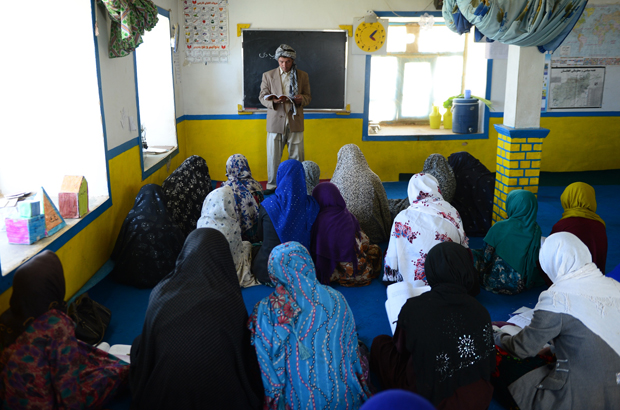
<p>In Kano on the edge of the city in Fagge LGA we visited a Koranic school that had an enthusiastic, head teacher struggling against the odds to education hundreds of poor local children. The school straggles over 3 or 4 cement block structures, stiflingly hot, packed with kids on the floor - other children get more air under the veranda but have to contend with the stench and flies from an open sewer. </p>
<div id="attachment_2249" class="wp-caption alignleft" style="width: 256px"><a href="http://blogs.dfid.gov.uk/wp-content/uploads/2009/06/240620091122.jpg"><img class="size-medium wp-image-2249" title="School and Sewer" src="http://blogs.dfid.gov.uk/wp-content/uploads/2009/06/240620091122-333x250.jpg" alt="School and Sewer" width="246" height="177" /></a><p class="wp-caption-text">School and Sewer</p></div>
<p>Most of the time is spent on reciting Islamic verses, but for the younger children overflowing the classes the school was little more than a holding area.</p>
<div id="attachment_2250" class="wp-caption alignright" style="width: 304px"><a href="http://blogs.dfid.gov.uk/wp-content/uploads/2009/06/240620091120.jpg"><img class="size-medium wp-image-2250" title="Girls Overflow" src="http://blogs.dfid.gov.uk/wp-content/uploads/2009/06/240620091120-333x250.jpg" alt="Girls Overflow" width="294" height="216" /></a><p class="wp-caption-text">Girls Overflow</p></div>
<p>A recent innovation that DFID is keen to support Kano State's government to expand is the addition of Maths and English lessons in schools such as this. Already a single lesson of each was on offer, the limiting factor being the supply of government teachers - the others are volunteers from the community who provide the religious teaching, a commodity that is highly valued in these poor Northern back streets.</p>
<div id="attachment_2246" class="wp-caption alignleft" style="width: 343px"><a href="http://blogs.dfid.gov.uk/wp-content/uploads/2009/06/170620091110.jpg"><img class="size-medium wp-image-2246" title="Learning to Read" src="http://blogs.dfid.gov.uk/wp-content/uploads/2009/06/170620091110-333x250.jpg" alt="Learning to Read" width="333" height="250" /></a><p class="wp-caption-text">Learning to Read</p></div>
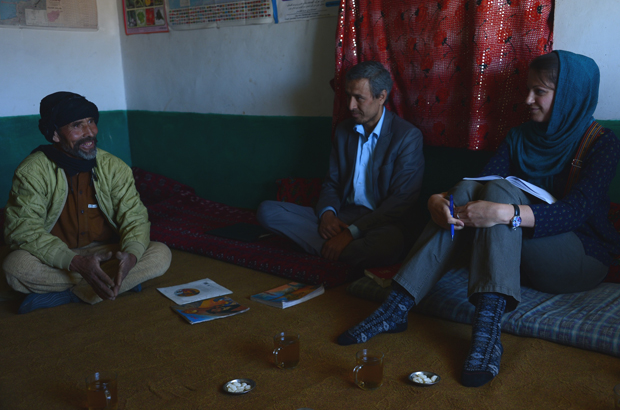
<p>Our review visits saw evidence of poverty and need, but also innovation and the potential for change.  In Kano the Education Commissioner was passionate about getting more girls into better quality Islamic schools that gave both religious and secular skills.</p>
<p>While in Kwara I saw a zeal to transform government with whole scale reforms underway to improve the College of Education, and introduce 'leak free' payroll systems. The enormity of the challenge is truly daunting, to provide education of an acceptable quality in all Geo-Zones of Nigeria!</p>
]]></content:encoded>
			<wfw:commentRss>http://blogs.dfid.gov.uk/2009/06/its-also-grim-up-north/feed/</wfw:commentRss>
	<media:content url="http://blogs.dfid.gov.uk/wp-content/uploads/userphoto/ianattfield.thumbnail.4976455cb21c6.jpg" width="80" height="80">
<media:title type="plain">Ian Attfield</media:title>
<media:description>Education Adviser</media:description>
<media:credit role="author">IanAttfield</media:credit>
</media:content>
	</item>
		<item>
		<title>Raising money to improve health</title>
		<link>http://blogs.dfid.gov.uk/2009/06/raising-money-to-improve-health/</link>
		<comments>http://blogs.dfid.gov.uk/2009/06/raising-money-to-improve-health/#comments</comments>
		<pubDate>Mon, 29 Jun 2009 10:08:04 +0000</pubDate>
		<dc:creator>Neil Squires</dc:creator>
		
		<category><![CDATA[Uncategorized]]></category>

		<category><![CDATA[donors &amp; funding]]></category>

		<category><![CDATA[health]]></category>

		<category><![CDATA[Mozambique]]></category>

		<guid isPermaLink="false">http://blogs.dfid.gov.uk/?p=2185</guid>
		<description><![CDATA[I have been eagerly awaiting this web link to the report of the Taskforce on Innovative International Financing for Health Systems.
One of the major outcomes of the UN Millennium Development Goal Call to Action, high level event held in New York in September 2008, was the announcement by Gordon Brown of the Taskforce on Innovative [...]]]></description>
			<content:encoded><![CDATA[<p><a href="http://www.internationalhealthpartnership.net/taskforce.html"><img class="alignright size-full wp-image-2187" title="The Taskforce's banner © IHP" src="http://blogs.dfid.gov.uk/wp-content/uploads/2009/06/taskforce.jpg" alt="" width="339" height="88" /></a>I have been eagerly awaiting this web link to the report of the <a href="http://www.internationalhealthpartnership.net/pdf/IHP%20Update%2013/Taskforce/Johansbourg/Final%20Taskforce%20Report.pdf">Taskforce on Innovative International Financing for Health Systems</a>.</p>
<p>One of the major outcomes of the <a href="http://www.un.org/millenniumgoals/2008highlevel">UN Millennium Development Goal Call to Action</a>, high level event held in New York in September 2008, was the announcement by Gordon Brown of the Taskforce on Innovative International Financing. Co-chaired by Prime Minister Brown and World Bank President, Robert Zoellick. The taskforce's objective was to identify ways of raising additional money to help countries achieve improved health and progress towards the MDGs. The taskforce met to finalise the report on <a href="http://www.internationalhealthpartnership.net/pdf/IHP%20Update%2013/Taskforce/Taskforce%20Press%20Release%20-%20040309.pdf">5<sup>th</sup> March</a>, but we have had to wait until now to get the final read out of this work.</p>
<p>Both President Guebuza and Mozambique's Health Minister, Dr. Garrido, participated in the New York UN Summit where the taskforce was launched. They went to the meeting to highlight the progress Mozambique has already made improving health, but also to highlight the outstanding challenges and the <a href="http://blogs.dfid.gov.uk/2008/11/health-related-progress-in-mozambique">funding gap the country faces if it is to reach the MDGs</a>. Mozambique is still trying to fill its financing gap and I recently posted a blog on the efforts the country is making to secure <a href="http://blogs.dfid.gov.uk/2009/05/mozambique-prepares-its-global-fund-application">round 9 funding from the Global Fund</a>, looking for a much needed injection of financing to increase health worker training and recruitment and expand access to services.  Recommendation 7 of the taskforce really addresses this issue, highlighting the need for more efficient funding, through both existing and new funding channels to fill gaps in costed and agreed national health strategies.</p>
<div id="attachment_2190" class="wp-caption alignleft" style="width: 264px"><img class="size-full wp-image-2190 " title="The Taskforce meeting in Paris last month © IHP" src="http://blogs.dfid.gov.uk/wp-content/uploads/2009/06/b-kouchner.jpg" alt="The Taskforce meeting in Paris last month" width="254" height="197" /><p class="wp-caption-text">The Taskforce meeting in Paris last month</p></div>
<p>A few months ago the headline figures for the additional funding needed to achieve the MDGs would have appeared extremely ambitious for those of us who find it difficult to think in terms of billions of dollars. The taskforce estimates that an increase in funding for health from $31 billion per year to $67 - 76 billion is needed to achieve the MDGs. With all the news recently of multi-billion dollar bail-outs, it’s become a little easier to think in terms of billions of dollars. And to be realistic, health will also need billions of dollars during the downturn if we are to keep up the progress made so far. With this extra money the taskforce is looking to raise, 4 million childhood deaths could be averted and 780,000 avoidable adult deaths could be prevented, including 322,000 deaths of women as a result of pregnancy.</p>
<p>Whilst we should not underestimate the challenge of mobilising these additional resources in a time of economic crisis, the task no longer seems impossible. DFID's commitment and timetable to progress towards the European Union (EU) target of allocating 0.7% of Gross National Income to development demonstrates that the UK remains firmly committed to keeping its promise. With the additional investment recommendations proposed by the taskforce report, which include a solidarity levy on airline tickets, the expansion of the <a href="http://www.iff-immunisation.org/favicon.ico">International Financing Facility for Immunisation (IFFIm)</a>, and making it easier for rich individuals to make large scale philanthropic donations, hopes should remain high that the additional funds needed can be mobilised.</p>
]]></content:encoded>
			<wfw:commentRss>http://blogs.dfid.gov.uk/2009/06/raising-money-to-improve-health/feed/</wfw:commentRss>
	<media:content url="http://blogs.dfid.gov.uk/wp-content/uploads/userphoto/neilsquires.thumbnail.4922bbf707b4f.jpg" width="80" height="80">
<media:title type="plain">Neil Squires</media:title>
<media:description>Human Development Adviser, Mozambique</media:description>
<media:credit role="author">NeilSquires</media:credit>
</media:content>
	</item>
		<item>
		<title>Waiting for the rains</title>
		<link>http://blogs.dfid.gov.uk/2009/06/waiting-for-the-rains/</link>
		<comments>http://blogs.dfid.gov.uk/2009/06/waiting-for-the-rains/#comments</comments>
		<pubDate>Fri, 26 Jun 2009 13:39:19 +0000</pubDate>
		<dc:creator>Sarah Sanyahumbi</dc:creator>
		
		<category><![CDATA[Uncategorized]]></category>

		<category><![CDATA[Climate Change]]></category>

		<category><![CDATA[environment]]></category>

		<category><![CDATA[food security]]></category>

		<category><![CDATA[Kathmandu]]></category>

		<category><![CDATA[Nepal]]></category>

		<guid isPermaLink="false">http://blogs.dfid.gov.uk/?p=2231</guid>
		<description><![CDATA[We Brits are famous for always talking about the weather, but people here in Nepal are doing that a lot too at the moment. But the different nationalities come at it from a rather different angle. In the UK we love it when the sun shines. In Nepal, it's the rains that make people happy!
It [...]]]></description>
			<content:encoded><![CDATA[<p><a href="http://blogs.dfid.gov.uk/wp-content/uploads/2009/06/img_09041.jpg"></a>We <a title="Read more about British traits from the Telegraph online" href="http://www.telegraph.co.uk/news/uknews/3410733/Talking-about-weather-is-top-British-trait.html" target="_blank">Brits are famous for always talking about the weather</a>, but people here in Nepal are doing that a lot too at the moment. But the different nationalities come at it from a rather different angle. In the UK we love it when the sun shines. In Nepal, it's the rains that make people happy!</p>
<p>It has been very hot and humid in Kathmandu for the past few weeks and the <a title="Find out more about monsoon rains" href="http://en.wikipedia.org/wiki/Monsoon" target="_blank">monsoon</a> is showing no signs of arriving. I was in a meeting earlier this week, and half way through the meeting, it started to rain heavily. The temperature immediately cooled and the meeting participants looked at one another and smiled - it's raining! Usually in the UK, people complain when it rains. Here, it is seen as a good thing - not only because it cools the air, but because the rains are absolutely vital for the 20 million people in Nepal who rely on rain to grow food.</p>
<p>With the monsoon about two weeks late, and just a weak surge on 23<sup>rd</sup> June in some districts in the east of the country, <a title="Read more about the problems of the dry spell from The Kathmandu Post" href="http://www.kantipuronline.com/kolnews.php?&amp;nid=200298" target="_blank">farmers are left worrying that the long dry spell will badly affect the upcoming maize harvest </a>and the paddy plantation. At this time of the year, paddy plantation should have been at its peak all over the country here!</p>
<div id="attachment_2234" class="wp-caption alignleft" style="width: 343px"><a href="http://blogs.dfid.gov.uk/wp-content/uploads/2009/06/img_09042.jpg"><img class="size-medium wp-image-2234" title="Women in the paddy fields" src="http://blogs.dfid.gov.uk/wp-content/uploads/2009/06/img_09042-333x250.jpg" alt="Women in the paddy fields. Credit: Sangeeta Shrestha, DFID Nepal" width="333" height="250" /></a><p class="wp-caption-text">Women in the paddy fields. Credit: Sangeeta Shrestha, DFID Nepal</p></div>
<p>80% of the population in Nepal and 95% of the poor rely on agriculture for all or part of their livelihoods. Land is relatively scarce (as a lot of the country is mountainous) and only 20 % of the total area can be used for agriculture. Irrigation, which in other countries has helped to significantly increase production, is not well developed here. Nepal is only slightly smaller than Bangladesh, but only 36% of the land possible is covered by irrigation, compared with 56% in Bangladesh.</p>
<p>Nepal also has the lowest agricultural productivity in South Asia and is a food importer, importing anything from 0% to 20% of its food needs, depending on the amount of rain received in the previous growing season. So good rains really are critical.</p>
<p>We had a water shortage in the office this week, so had to temporarily close several bathrooms due to a lack of water. Because the monsoon is late, farmers were refusing to release water to the water tankers which normally deliver water to the office (and some homes) as they were saving this for their own paddy fields. Good rains dictate whether there is a good harvest or not, and a good harvest can make all the difference between being able to feed your family, or not.</p>
<p>Unfortunately the rains which came during my meeting had stopped by the time the meeting finished, so we are still left waiting for the monsoon which has become more erratic in past years, as predicted by climate change experts. So I am left with the very un-British sentiment of hoping it will rain again soon!!</p>
]]></content:encoded>
			<wfw:commentRss>http://blogs.dfid.gov.uk/2009/06/waiting-for-the-rains/feed/</wfw:commentRss>
	<media:content url="http://blogs.dfid.gov.uk/wp-content/uploads/userphoto/sarahsanyahumbi.thumbnail.jpg" width="80" height="80">
<media:title type="plain">Sarah Sanyahumbi</media:title>
<media:description>Head of DFID Nepal</media:description>
<media:credit role="author">SarahSanyahumbi</media:credit>
</media:content>
	</item>
		<item>
		<title>Swallows &#038; survival: Paying for healthcare</title>
		<link>http://blogs.dfid.gov.uk/2009/06/mutuelles/</link>
		<comments>http://blogs.dfid.gov.uk/2009/06/mutuelles/#comments</comments>
		<pubDate>Mon, 22 Jun 2009 16:58:44 +0000</pubDate>
		<dc:creator>Martin Leach</dc:creator>
		
		<category><![CDATA[Uncategorized]]></category>

		<category><![CDATA[health]]></category>

		<category><![CDATA[Rwanda]]></category>

		<guid isPermaLink="false">http://blogs.dfid.gov.uk/?p=2201</guid>
		<description><![CDATA[
OK, let's back to the Swallows - I've got to write about them first, as several people reading this blog have asked me how they are getting on.  Four weeks ago, the three baby swallows in the nest on my balcony fledged.   ie they came out of the nest and flew - up onto the [...]]]></description>
			<content:encoded><![CDATA[<div id="attachment_2209" class="wp-caption alignright" style="width: 449px"><a href="http://blogs.dfid.gov.uk/wp-content/uploads/2009/06/young-in-nest2.jpg"><img class="size-medium wp-image-2209" title="young-in-nest2" src="http://blogs.dfid.gov.uk/wp-content/uploads/2009/06/young-in-nest2-439x250.jpg" alt="Baby Swallows" width="439" height="250" /></a><p class="wp-caption-text">Baby Swallows</p></div>
<p>OK, let's back to the <a href="http://blogs.dfid.gov.uk/2009/05/livelihoods-on-the-edge/">Swallows </a>- I've got to write about them first, as several people reading this blog have asked me how they are getting on.  Four weeks ago, the three baby swallows in the nest on my balcony fledged.   ie they came out of the nest and flew - up onto the guttering, and then, after four days of shouting at their parents to feed them - they were gone.  Just like human children, I expect; their departure left me feeling at little empty. </p>
<p>To add to that, I have been away from Kigali for a couple of weeks in the UK where a close relative passed away, which was very sad for me and my family.  Most of us from the UK don't encounter death regularly; children are inoculated at birth against all sorts of diseases, everyone gets plenty of good food, and the health service is well equipped and can fix many problems.  But things aren't the same in Rwanda.  This morning I cycled past King Faisal Hospital - which is the main hospital in town, with the best facilities and some of the country's top medical specialists.  But even with this available, some of the richest people in the country will still travel to Nairobi or South Africa if they have serious health problems.</p>
<div id="attachment_2211" class="wp-caption alignleft" style="width: 454px"><a href="http://blogs.dfid.gov.uk/wp-content/uploads/2009/06/avega-clinic-pharmacy-arvs-compressed.jpg"><img class="size-medium wp-image-2211" title="avega-clinic-pharmacy-arvs-compressed" src="http://blogs.dfid.gov.uk/wp-content/uploads/2009/06/avega-clinic-pharmacy-arvs-compressed-444x250.jpg" alt="Drugs in a health centre pharmacy" width="444" height="250" /></a><p class="wp-caption-text">Drugs in a health centre pharmacy</p></div>
<p>That route is only available to very few, of course; everyone else uses what is available locally.  In the rural areas (ie most of the country) there are small health centres with inpatient beds and outpatient clinics, staffed by nurses and sometimes a doctor, who can treat minor conditions.  The health centre pharmacy should be stocked with the standard range of basic drugs, including ARVs.  But still the current health numbers for Rwanda are shocking to me: 103 out of every thousand children die before their fifth birthday - that is one in every ten little kids you see on the street die before they are 5 years old (it is 6.5 per 1000 in the UK), and 750 women out of every 100,000 giving birth will die as a result of their pregnancy (that is one woman dying in childbirth every three hours ). </p>
<p>The big problem is resources: the Rwandan Government does not have enough money to go round all the needs: to put it in perspective, the British Government last had the same amount of money per head available as Rwanda has now to spend on its population, in 1709 - exactly 300 years ago.  So choices are really tough, and the way the Government deals with it in the health sector is having a mutual contributory health insurance scheme, known as the ‘<a href="http://www.brookings.edu/~/media/Files/events/2007/1022_rwanda/1022_rwanda.pdf">Mutuelles de Sante</a>'.  Membership costs £1.30 per person per year, and the poorest should get their contributions paid.  About 70% of the population are members, and attendance at health centres has hugely increased as a result.  </p>
<div id="attachment_2212" class="wp-caption alignright" style="width: 205px"><a href="http://blogs.dfid.gov.uk/wp-content/uploads/2009/06/soldier-cropped.jpg"><img class="size-medium wp-image-2212" title="soldier-cropped" src="http://blogs.dfid.gov.uk/wp-content/uploads/2009/06/soldier-cropped-195x250.jpg" alt="Laurent Rugero" width="195" height="250" /></a><p class="wp-caption-text">Laurent Rugero</p></div>
<p>But because people have to make a co-payment of £0.20 for each visit and pay 10% of the cost of hospital treatment, some people still do not come, fearing bills which they have no way of paying. Take Lauent Rugero, the blind, disabled, ex-soldier I met in Kayonza; there is no way he could afford these payments; he only has a bed, some clothers and a few cooking implements in his 10 foot square mud built house. But other, richer people can afford them - and could make even larger contributions.  Some argue that a completely free system would be best, but the Government fears unnecessary use of the system and creating a culture of dependency, so financial contributions continue. </p>
<p>Controversial stuff, certainly, (see this document, <a href="http://www.brookings.edu/~/media/Files/events/2007/1022_rwanda/1022_rwanda.pdf">Towards universal health coverage in Rwanda</a>, a 2007 briefing by Caroline Kayonga, Permanent Secretary, Ministry of Health, Rwanda) but vital to get it right.  DFID is a major contributor to the health system, but in the long run it will be Rwandan people and their Government who will shoulder the full burden of paying the costs of health, and they need a system that will fit their circumstances.</p>
<p>The swallows were successful in bringing up their offspring - I don't think any died; luckier than many families living here.  Now they have even come back to the nest to have another brood, and I won't be able to resist writing about their future progress.</p>
]]></content:encoded>
			<wfw:commentRss>http://blogs.dfid.gov.uk/2009/06/mutuelles/feed/</wfw:commentRss>
	<media:content url="http://blogs.dfid.gov.uk/wp-content/uploads/userphoto/martinleach.thumbnail.496f4c814a8f8.jpg" width="80" height="80">
<media:title type="plain">Martin Leach</media:title>
<media:description>Head of DFID Rwanda and Burundi</media:description>
<media:credit role="author">MartinLeach</media:credit>
</media:content>
	</item>
		<item>
		<title>Business acts to fight poverty</title>
		<link>http://blogs.dfid.gov.uk/2009/06/business-acts-to-fight-povery/</link>
		<comments>http://blogs.dfid.gov.uk/2009/06/business-acts-to-fight-povery/#comments</comments>
		<pubDate>Fri, 12 Jun 2009 13:31:55 +0000</pubDate>
		<dc:creator>Adam Smith</dc:creator>
		
		<category><![CDATA[Uncategorized]]></category>

		<category><![CDATA[africa]]></category>

		<category><![CDATA[business]]></category>

		<category><![CDATA[Business Call to Action]]></category>

		<category><![CDATA[cape town]]></category>

		<category><![CDATA[world economic forum]]></category>

		<guid isPermaLink="false">http://blogs.dfid.gov.uk/?p=2158</guid>
		<description><![CDATA[Readers of my earlier blog will be familiar with the Business Call to Action (BCtA), a great initiative that aims to get business involved in the development agenda by thinking how, through their core business activities, they can have a positive impact on the lives of people in developing countries. Our team has been working hard alongside the [...]]]></description>
			<content:encoded><![CDATA[<p>Readers of my <a href="http://blogs.dfid.gov.uk/2009/02/not-quite-an-oscar/" target="_blank">earlier blog </a>will be familiar with the <a href="http://bcta-initiative.org/" target="_blank">Business Call to Action</a> (BCtA), a great initiative that aims to get business involved in the development agenda by thinking how, through their core business activities, they can have a positive impact on the lives of people in developing countries. Our team has been working hard alongside the UN Development Programme to commemorate the 1 year anniversary of the initiative to celebrate the successes so far and look to the future.</p>
<div id="attachment_2159" class="wp-caption alignnone" style="width: 384px"><a href="http://blogs.dfid.gov.uk/wp-content/uploads/2009/06/tshidi-kpmg.jpg"><img class="size-medium wp-image-2159" title="Tshidi Mokgabudi" src="http://blogs.dfid.gov.uk/wp-content/uploads/2009/06/tshidi-kpmg-374x250.jpg" alt="Tshidi Mokgabudi from KPMG's 'Obabia Foundation' posts her signed commitment to the BCtA" width="374" height="250" /></a><p class="wp-caption-text">Tshidi Mokgabudi from KPMG</p></div>
<p>On Thursday 11th June, representatives from 60 African and international businesses came together along with other dignitaries including the Ugandan Minister of State for Industry and Technology the Hon Simon Lokodo for a side event at the <a href="http://www.weforum.org/en/events/WorldEconomicForumonAfrica2009/index.htm" target="_blank">World Economic Forum on Africa</a> in Cape Town 2009. They discussed the good progress the 18 initiatives that have already been announced have made towards their aim of improving the lives of people in poor countries. There was also exciting news from Microsoft Africa, Goldman Sachs and Biwater that they intend to develop initiatives under the BCtA. The details of these intiatives will be formally announced once they have been fully developed.</p>
<p>One of these ideas put forward was plans by Biwater to finance, design and construct a water treatment plant in <a href="http://en.wikipedia.org/wiki/Omdurman" target="_blank">Omdurman</a>, part of the Sudanese capital Khartoum. <a href="http://www.biwater.co.uk/default.aspx" target="_blank">Biwater</a> is a British company that specialises in water management and treatment. Through the use of innovative financing, the company will bring, for the first time, clean and safe water to 1.5 million people in this poor suburb of Khartoum, many of whom have moved here to escape conflict, poverty or environmental degradation. It is envisaged that if this project is successful it can be expanded to other countries in Africa. The details of the project are still to be finalised in collaboration with the BCtA partnership; watch this space for details of the formal announcement of this initiative!</p>
<p>The <a href="http://www.dfid.gov.uk/Media-Room/News-Stories/2009/Business-leaders-celebrate-progress-and-pledge-to-invest-more-in-Africa/" target="_blank">DFID website</a> has a more comprehensive note of the event itself, as well as details of <a href="http://www.dfid.gov.uk/About-DFID/Who-we-work-with1/Business/" target="_blank">how else we work with business</a> to tackle poverty across the globe. I will add videos from Coca-Cola and MAP International when I can upload them and the full collection of videos from the event will be available on the <a href="http://bcta-initiative.org/" target="_blank">Business Call to Action website</a> soon!</p>
<p><a href="http://blogs.dfid.gov.uk/wp-content/uploads/2009/06/coca-cola2.wmv"></a></p>
]]></content:encoded>
			<wfw:commentRss>http://blogs.dfid.gov.uk/2009/06/business-acts-to-fight-povery/feed/</wfw:commentRss>
	<media:content url="http://blogs.dfid.gov.uk/wp-content/uploads/userphoto/adamsmith.thumbnail.4970916e07da5.jpg" width="80" height="80">
<media:title type="plain">Adam Smith</media:title>
<media:description>Business Alliances Policy Support Officer</media:description>
<media:credit role="author">AdamSmith</media:credit>
</media:content>
	</item>
		<item>
		<title>A few days in the field</title>
		<link>http://blogs.dfid.gov.uk/2009/06/a-few-days-in-the-field/</link>
		<comments>http://blogs.dfid.gov.uk/2009/06/a-few-days-in-the-field/#comments</comments>
		<pubDate>Wed, 10 Jun 2009 08:23:53 +0000</pubDate>
		<dc:creator>Adam Jackson</dc:creator>
		
		<category><![CDATA[Uncategorized]]></category>

		<category><![CDATA[Bangladesh]]></category>

		<category><![CDATA[donors &amp; funding]]></category>

		<category><![CDATA[maternal health]]></category>

		<category><![CDATA[MDGs]]></category>

		<category><![CDATA[self-sufficiency]]></category>

		<category><![CDATA[sustainability]]></category>

		<guid isPermaLink="false">http://blogs.dfid.gov.uk/?p=2053</guid>
		<description><![CDATA[I’m just back from a trip to the far north west of Bangladesh, near the Indian border. It was a very welcome, cool and quiet change from Dhaka. I first took part in a review of joint donor support to the health sector with colleagues from DFID, the World Health Organisation and the Government of [...]]]></description>
			<content:encoded><![CDATA[<div id="attachment_2054" class="wp-caption alignright" style="width: 384px"><a href="http://blogs.dfid.gov.uk/wp-content/uploads/2009/05/_mg_3155.jpg"><img class="size-medium wp-image-2054" title="_mg_3155" src="http://blogs.dfid.gov.uk/wp-content/uploads/2009/05/_mg_3155-374x250.jpg" alt="CLP Beneficiary, Kurigram" width="374" height="250" /></a><p class="wp-caption-text">CLP Beneficiaries at a Group Meeting, Kurigram</p></div>
<p class="MsoNormal" style="margin: 0cm 0cm 0pt;"><span style="font-size: 10pt; color: #000000; font-family: Verdana; mso-fareast-language: EN-GB;">I’m just back from a trip to the far <a href="http://en.wikipedia.org/wiki/Kurigram_District"><span style="mso-bidi-font-size: 12.0pt;">north west</span></a> of Bangladesh, near the Indian border. It was a very welcome, cool and quiet change from Dhaka. I first took part in a review of joint donor support to the health sector with colleagues from DFID, the World Health Organisation and the Government of Bangladesh. After finishing the review, I travelled further north to make a presentation on poverty levels in Bangladesh at a regional workshop. This was organised by the <span style="mso-bidi-font-size: 12.0pt;"><a href="http://www.clp-bangladesh.org/">Chars Livelihoods Programme</a> </span>(CLP), which works with rural households living on the fragile sand islands in the mighty Jamuna River and which DFID funds.</span></p>
<p class="MsoNormal" style="margin: 0cm 0cm 0pt;"><span style="font-size: 10pt; color: #000000; font-family: Verdana; mso-fareast-language: EN-GB;"> </span></p>
<p class="MsoNormal" style="margin: 0cm 0cm 0pt;"><span style="font-size: 10pt; color: #000000; font-family: Verdana; mso-fareast-language: EN-GB;">Both programmes are producing great results. Our health review team visited a District hospital where mothers who would never normally have access to safe delivery facilities had very recently given birth thanks to a voucher scheme funded by DFID and a number of other donors. Fifty miles away in the Chars I and the other workshop participants visited a village and met a number of women - some of the most vulnerable people on the planet - who had been given assets of their choice (typically a pair of cows) and had their homes raised on clay plinths above the seasonal flood level, as well as a range of other support to enable them to become self-sufficient. Some have since rented land to grow crops for sale and others have started small businesses; almost all now have substantially higher incomes, more to eat and better protection from the river. Both of these programmes contribute to the <a href="http://www.unmillenniumproject.org/goals/index.htm"><span style="mso-bidi-font-size: 12.0pt;">Millennium Development Goals</span></a>, and produce results that few people interested in the welfare of the poorest would argue with.</span></p>
<p class="MsoNormal" style="margin: 0cm 0cm 0pt;"><span style="font-size: 10pt; color: #000000; font-family: Verdana; mso-fareast-language: EN-GB;"> </span></p>
<p class="MsoNormal" style="margin: 0cm 0cm 0pt;"><span style="font-size: 10pt; color: #000000; font-family: Verdana; mso-fareast-language: EN-GB;">And yet there are also great differences. The health programme works largely through Government systems, aiming to build capacity and achieve long term systemic reform so that services can continue once our support has gone. This brings with it greater uncertainties, a much slower process and less control over the use of our money compared with the CLP, which gets resources into the hands of the poor very quickly but channels most of its support outside Government systems and would be unlikely to continue to operate were it not for ongoing funding. The Government of Bangladesh <span style="color: #000000;">has approved and formally </span>sponsors the outsourced CLP model, but it remains to be seen whether they will expand such approaches to public services and safety net delivery using their own funds.</span></p>
<p class="MsoNormal" style="margin: 0cm 0cm 0pt;"><span style="font-size: 10pt; color: #000000; font-family: Verdana; mso-fareast-language: EN-GB;"> </span></p>
<p class="MsoNormal" style="margin: 0cm 0cm 0pt;"><span style="font-size: 10pt; color: #000000; font-family: Verdana; mso-fareast-language: EN-GB;">The question of which model is more appropriate lies at the heart of the development debate. <a href="http://www.owen.org/about/cv"><span style="mso-bidi-font-size: 12.0pt;">Owen Barder</span></a> has recently <a href="http://www.owen.org/blog/2283"><span style="mso-bidi-font-size: 12.0pt;">written an article</span></a> arguing that commitment to long-term sustainability should not blind us to the need to provide welfare to the poorest people in the world while their countries’ economies and governments develop, a complex and gradual process upon which aid can only have effects at the margin. And the CLP aims to build sustainability in a different way by connecting people to local markets and <span style="color: #000000;">helping them build </span>the independence to assert their rights and demand government services. At the same time, a successful country-wide Government health programme will reach millions of people and has the potential to produce direct results many years after our support ends.</span></p>
<p class="MsoNormal" style="margin: 0cm 0cm 0pt;"> </p>
<p class="MsoNormal" style="margin: 0cm 0cm 0pt; mso-margin-top-alt: auto; mso-margin-bottom-alt: auto;"><span style="font-size: 10pt; color: #000000; font-family: Verdana; mso-fareast-language: EN-GB;">Donors have come a long way in recent years in thinking through and balancing these issues. It is clearer than ever that there is no one-size-fits-all approach to development. Sustained engagement with the local context, a variety of approaches and rigorous, transparent evaluation are the only way to produce results that British taxpayers can consider worthwhile and that are maintained well into the future.</span></p>
]]></content:encoded>
			<wfw:commentRss>http://blogs.dfid.gov.uk/2009/06/a-few-days-in-the-field/feed/</wfw:commentRss>
	<media:content url="http://blogs.dfid.gov.uk/wp-content/uploads/userphoto/adamjackson.thumbnail.jpg" width="80" height="80">
<media:title type="plain">Adam Jackson</media:title>
<media:description>Economic Advisor, DFID Bangladesh</media:description>
<media:credit role="author">AdamJackson</media:credit>
</media:content>
	</item>
		<item>
		<title>Of women and children</title>
		<link>http://blogs.dfid.gov.uk/2009/06/of-women-and-children/</link>
		<comments>http://blogs.dfid.gov.uk/2009/06/of-women-and-children/#comments</comments>
		<pubDate>Fri, 05 Jun 2009 13:39:08 +0000</pubDate>
		<dc:creator>Sarah Sanyahumbi</dc:creator>
		
		<category><![CDATA[Uncategorized]]></category>

		<category><![CDATA[education]]></category>

		<category><![CDATA[empowering women]]></category>

		<category><![CDATA[finance]]></category>

		<category><![CDATA[microcredit]]></category>

		<category><![CDATA[Nepal]]></category>

		<category><![CDATA[Nepalgunj]]></category>

		<guid isPermaLink="false">http://blogs.dfid.gov.uk/?p=2128</guid>
		<description><![CDATA[Last week I took my first trip outside Kathmandu and flew to Nepalgunj. Nepalgunj is in the Terai. This is a very different part of the country - and is a world away from the popular image people have of Nepal. Not a mountain in sight - instead there are hot, dry and dusty plains, very [...]]]></description>
			<content:encoded><![CDATA[<p>Last week I took my first trip outside Kathmandu and flew to Nepalgunj. Nepalgunj is in the Terai. This is a very different part of the country - and is a world away from the popular image people have of Nepal. Not a mountain in sight - instead there are hot, dry and dusty plains, very much like the northern plains of India, which is not surprising given that Nepalgunj is about 7km from the border of Uttar Pradesh, and only 150m above sea level.</p>
<div id="attachment_2130" class="wp-caption alignleft" style="width: 343px"><a href="http://blogs.dfid.gov.uk/wp-content/uploads/2009/06/school-inauguration.jpg"><img class="size-medium wp-image-2130 " title="School inauguration" src="http://blogs.dfid.gov.uk/wp-content/uploads/2009/06/school-inauguration-333x250.jpg" alt="School inauguration" width="333" height="250" /></a><p class="wp-caption-text">School inauguration</p></div>
<p>It was a fascinating visit, but from a raft of impressions from the visit, what I wanted to write about was the women I met. When I went to open the new primary school that DFID had helped the community to build, the whole local community was there, about 200 people. Among these were about 70 women, mostly mothers of the children at the school. They had been involved in the school building, and were also involved in local credit schemes. Take a look at the <a href="http://www.csp.org.np/" target="_blank">Community Support Programme website</a> to find out more.</p>
<p>There were three groups of women, all in matching saris depending on which group they belonged to: Red, pink or green. There was a sense of pride and solidarity in their "uniforms" and they stuck together in their groups throughout the whole inauguration ceremony and afterwards.</p>
<p>I wanted to know more about their credit groups. They were very organised. Only married women can belong, as they did not want an unmarried woman joining, taking out a loan, and then moving away because she had married and would go to live with her husband's family (possibly in another district) as is the custom here. They each contributed 61 Nepalese Rupees (NRs) a month to the kitty - this is about 50p. I asked why 61, not 60 and was told that 60 goes into the kitty and the 1 rupee goes towards stationary and running costs of the group. Very organised!</p>
<p>Most of the time the loans are between NRs 10-40,000 (£80 - £325), and are used to open small shops or to grow vegetables (to buy seeds and implements etc). We asked if they ever took loans to pay for a wedding or a dowry and they were shocked at such frivolous ideas! We asked what they did with the extra money the shops or vegetables brought in, but they were quite reticent about telling us. Studies of such credit groups show that additional income is usually used to supplement the food of the family, primarily the children, or to help pay for schooling. Perhaps if there is a little spare, they may buy a new sari, but they were not going to say that in front of the men of the community who were watching and listening closely! </p>
<div id="attachment_2133" class="wp-caption alignright" style="width: 343px"><a href="http://blogs.dfid.gov.uk/wp-content/uploads/2009/06/talking-to-women.jpg"><img class="size-medium wp-image-2133 " title="Talking to the credit group" src="http://blogs.dfid.gov.uk/wp-content/uploads/2009/06/talking-to-women-333x250.jpg" alt="Talking to credit group" width="333" height="250" /></a><p class="wp-caption-text">Talking to the credit group</p></div>
<p>And then something happened which has really stuck in my mind: I asked about safety, as the Terai can be a very dangerous place with criminal gangs controlling some areas. One group admitted they had once been robbed on the way to deposit money in the bank, so I suggested they should ask the men to accompany them, to provide additional security. They laughed at this idea and one woman explained that the men were not interested and did not support the women in what they were doing (even though at least indirectly they would also be getting the benefit of the increased income). At this, an older man stepped forward and shouted at the women - how dare they say such things, and how dare they say such things to foreigners! The effect was instantaneous and from a group of proud, confident women, they were suddenly more cowed, much more cautious. The discussion finished shortly afterwards.</p>
<p>The incident really underlined again for me the position that many women have in society here.  Despite great progress in some areas, many women in Nepal, particularly rural women, still have a rough deal.  Land is generally inherited from the father to the son, so women have much greater economic insecurity than men. A recent study showed that only 11 % of households had any land in female ownership, and only 7 % reported ownership of livestock. Somewhat surprising given that 72 % of women work in agriculture (compared to 48 % of men), and earn considerably less doing so - an average daily wage of NRs 47 (38p) per day compared to the male average of NRs 63 (51p).  This has an impact on the whole family, in Nepal around 50% of children are malnourished, and over 40% of adult women are too. Women eat last, eat the least and eat the worst food. It means their children are born malnourished and their future is permanently blighted. The low status of women is a key part of this problem.</p>
<p>But things are changing. I work in an office which has a good number of strong, dynamic Nepalese women, who are clearly the equal of their male counterparts.  33% of seats in the Nepalese Parliament are occupied by women - the highest number of women parliamentarians in South Asia. This compares favourably to the UK which stands at 19% or the US at just under 17%. And these women are beginning to make their mark. But these are educated and mostly urban women, and the impact of these favourable changes need to be felt more among poorer women too. That's why the programmes that we have on health, education, skills development and empowerment are so very important not only for the women I met last week, but for the next generation of women, girls and boys here in Nepal.</p>
]]></content:encoded>
			<wfw:commentRss>http://blogs.dfid.gov.uk/2009/06/of-women-and-children/feed/</wfw:commentRss>
	<media:content url="http://blogs.dfid.gov.uk/wp-content/uploads/userphoto/sarahsanyahumbi.thumbnail.jpg" width="80" height="80">
<media:title type="plain">Sarah Sanyahumbi</media:title>
<media:description>Head of DFID Nepal</media:description>
<media:credit role="author">SarahSanyahumbi</media:credit>
</media:content>
	</item>
		<item>
		<title>Where are the students?</title>
		<link>http://blogs.dfid.gov.uk/2009/05/where-are-the-students/</link>
		<comments>http://blogs.dfid.gov.uk/2009/05/where-are-the-students/#comments</comments>
		<pubDate>Fri, 29 May 2009 10:22:01 +0000</pubDate>
		<dc:creator>Ian Attfield</dc:creator>
		
		<category><![CDATA[DFID Nigeria]]></category>

		<category><![CDATA[aid effectiveness]]></category>

		<category><![CDATA[donors &amp; funding]]></category>

		<category><![CDATA[education]]></category>

		<category><![CDATA[natural resources]]></category>

		<category><![CDATA[Niger delta]]></category>

		<guid isPermaLink="false">http://blogs.dfid.gov.uk/?p=2058</guid>
		<description><![CDATA[Working for an organisation that funds development work (in my case DFID) means that I frequently receive requests from worthy causes for financial support. I recently got a call from a Western volunteer living in Nigeria with a difference; a brand new school built deep in the Niger Delta that has facilities and funds, but no [...]]]></description>
			<content:encoded><![CDATA[<p>Working for an organisation that funds development work (in my case DFID) means that I frequently receive requests from worthy causes for financial support. I recently got a call from a Western volunteer living in Nigeria with a difference; a brand new school built deep in the Niger Delta that has facilities and funds, but no teachers and students.<span id="more-2058"></span> What it needs is a workable legal structure.</p>
<p>The <a title="Academy in Bayelsa State" href="www.igali.com/index.php/main/foundation_school/" target="_blank">Maureen Matheny Academy</a> is located deep in the creeks of Bayelsa State in the oil rich Niger Delta of Nigeria. It is the dream of Olympic gold medalist and native son of Bayelsa, <a title="Daniel's Biography" href="http://www.igali.com/index.php/main/daniel_biography/" target="_blank">Baraladei Daniel Igali</a>, who wrestled his way to glory at the 2000 Sydney Games.</p>
<div id="attachment_2062" class="wp-caption alignleft" style="width: 288px"><img class="size-full wp-image-2062 " title="Academy built in the Jungle" src="http://blogs.dfid.gov.uk/wp-content/uploads/2009/05/academy-3.jpg" alt="Academy built in the Jungle" width="278" height="182" /><p class="wp-caption-text">Academy built in the Jungle</p></div>
<p>Daniel wished to help the Eniwari people, who had gained little from the ‘black gold' pumped from below their lands and have very limited access to social services such as schooling and health clinics. Located deep in the mangrove swamps and creeks, access is difficult; villages are often only joined by waterways. Navigating the river can be complicated and risky due to an increase in established militant camps and an <a title="Conflict in the Niger Delta" href="http://en.wikipedia.org/wiki/Conflict_in_the_Niger_Delta" target="_blank">insurgency</a> that is countered by military operations.</p>
<div id="attachment_2063" class="wp-caption alignright" style="width: 343px"><a href="http://blogs.dfid.gov.uk/wp-content/uploads/2009/05/library-1.jpg"><img class="size-medium wp-image-2063" title="Ready to go Library" src="http://blogs.dfid.gov.uk/wp-content/uploads/2009/05/library-1-333x250.jpg" alt="'Ready to go' Library" width="333" height="250" /></a><p class="wp-caption-text">Ready to go Library</p></div>
<p>Daniel formed the <a title="Igali Foundation" href="www.igali.com" target="_blank">Igali Foundation</a> and diligently managed to raise funds both in Nigeria and abroad in Canada where he settled. Canadian volunteers working with the community for several years <a title="Watch the school get built on YouTube" href="http://www.youtube.com/watch?v=Q268nKGEKmU" target="_blank">completed the main school</a> in 2006 - eleven classrooms, an administration building; an auditorium; a library; a computer lab; and teachers' quarters.  Further fundraising is ongoing and the Igali Foundation has ambitious plans for the Academy. Generous sponsors are lining up computers, library books, clean water - things that many schools in Nigeria can only dream about. However despite the desperate need for education, the school has struggled to operate for almost 3 years.</p>
<p>This school doesn't really want for funds or resources, but to function it needs something more fundamental - a level of peace and security in the vicinity and what in DFID we call 'good governance' - boring but important stuff like a Board of Governors, an admissions policy, a <a title="IMF blogs on PPP definitions" href="blog-pfm.imf.org/pfmblog/2008/02/a-primer-on-pub.html" target="_blank">Public Private Partnership</a> arrangement to regulate both Bayelsa State Government and private financial inputs. Without these the school is unlikely to really make a positive impact for the local Eniwari people and risks becoming an abandoned 'white elephant'.</p>
<p>I highlight this case not too denigrate the effort and resources that have gone into the Academy, the dedication and vision of Daniel and the others volunteers involved are to be applauded. I wish it every success and have passed on some contacts that may be of help in determining how best to manage the school and get it open as soon as possible. I’ll try to keep you posted.</p>
<p>DFID in Nigeria tends to finance the improvement of government systems and planning processes, rather than fund schools like this directly. This is to ensure that good resources like this are ultimately effective and workable. The large volumes of unused government finance (see my earlier blog on the Education Trust Fund) has led to this approach - although it’s a tough choice when the need for good facilities such as those at the Academy is so pressing.</p>
<p>I merely wish to make the case that many of Nigeria's problems cannot be solved by money or 'aid' alone, and in the Niger Delta the <a title="What 'natural resource curse' means" href="http://en.wikipedia.org/wiki/Resource_curse" target="_blank">curse of 'natural resources</a>' is extreme - oil worth US$ millions flowing for decades through communities that receive little except for pollution and violence.</p>
]]></content:encoded>
			<wfw:commentRss>http://blogs.dfid.gov.uk/2009/05/where-are-the-students/feed/</wfw:commentRss>
	<media:content url="http://blogs.dfid.gov.uk/wp-content/uploads/userphoto/ianattfield.thumbnail.4976455cb21c6.jpg" width="80" height="80">
<media:title type="plain">Ian Attfield</media:title>
<media:description>Education Adviser</media:description>
<media:credit role="author">IanAttfield</media:credit>
</media:content>
	</item>
		<item>
		<title>Mozambique signs its Global Fund application</title>
		<link>http://blogs.dfid.gov.uk/2009/05/mozambique-signs-its-global-fund-application/</link>
		<comments>http://blogs.dfid.gov.uk/2009/05/mozambique-signs-its-global-fund-application/#comments</comments>
		<pubDate>Fri, 29 May 2009 09:28:40 +0000</pubDate>
		<dc:creator>Neil Squires</dc:creator>
		
		<category><![CDATA[Uncategorized]]></category>

		<category><![CDATA[donors &amp; funding]]></category>

		<category><![CDATA[health]]></category>

		<category><![CDATA[Mozambique]]></category>

		<guid isPermaLink="false">http://blogs.dfid.gov.uk/?p=2089</guid>
		<description><![CDATA[The week started with a bang, with the official signing of Mozambique's application for round 9 funding from the Global Fund to Fight HIV/AIDS, TB and Malaria. The meeting room of UNAIDS in the leafy Sommerschield Bairo of Maputo is becoming a familiar rendevous point for the dozens of people who have been working to [...]]]></description>
			<content:encoded><![CDATA[<p>The week started with a bang, with the official signing of Mozambique's application for round 9 funding from the <a href="http://www.theglobalfund.org/en">Global Fund to Fight HIV/AIDS, TB and Malaria</a>. The meeting room of UNAIDS in the leafy Sommerschield Bairo of Maputo is becoming a familiar rendevous point for the dozens of people who have been working to prepare the application. Once again the meeting room was packed, but there was a sigh of relief once the Country Coordinating Mechanism (CCM) endorsed the proposals that need to be submitted by the 1<sup>st</sup> of June, marking the end of an ardous preparation process and the beginning of a long period of waiting and hoping.</p>
<div id="attachment_2097" class="wp-caption alignright" style="width: 406px"><a href="http://blogs.dfid.gov.uk/wp-content/uploads/2009/05/p5210361.jpg"><img class="size-full wp-image-2097  " title="Antonio Laice (centre) signs the application" src="http://blogs.dfid.gov.uk/wp-content/uploads/2009/05/p5210361.jpg" alt="Antonio Laice (centre) signs the application - click for bigger picture" width="396" height="284" /></a><p class="wp-caption-text">L-R: Josélia Mbanze (Kuyakana network for women living with HIV), Antonio Laice (National Director of the Treasury) and Dr Abdou Moha (WHO)</p></div>
<p><a href="http://www.afdevinfo.com/htmlreports/peo/peo_13924.html">Antonio Laice</a> is the National Director of the Treasury in Mozambique, and signed the applications on behalf of the Ministry of Finance. Mr. Laice is well know to the donor community in Mozambique and is an extremely capable but very approachable National Director who works closely with donor economists to oversee the significant volume of general budget support provided to Mozambique by a number of its partner.</p>
<div id="attachment_2101" class="wp-caption alignleft" style="width: 164px"><a href="http://blogs.dfid.gov.uk/wp-content/uploads/2009/05/p5210359.jpg"><img class="size-medium wp-image-2101" title="Diogo Milagre, deputy of the National AIDS Council" src="http://blogs.dfid.gov.uk/wp-content/uploads/2009/05/p5210359-187x250.jpg" alt="Diogo Milagre, deputy of the National AIDS Council" width="154" height="214" /></a><p class="wp-caption-text">Diogo Milagre, deputy of the National AIDS Council</p></div>
<p>I also include a picture of <a href="http://blogs.dfid.gov.uk/2008/12/do-donors-respond-to-national-priorities-or-try-to-set-them">Diogo Milagre</a>, the dynamic deputy of the National AIDS Council, and who I have done a blog on previously.</p>
<p>The Country Coordination Mechanism which had to endorse the applications to the Global Fund consists of a number of representatives of government, of civil society, of people living with HIV/AIDS and of international NGOs and donors. All have been involved in the preparation process, meeting to discuss earlier drafts of the proposals. The critical importance of securing new funding from the Global Fund is widely understood. These funds represent a life line to HIV positive people and people affected by malaria and TB in Mozambique. The support for the application was universal.</p>
<p>The process of preparing these applications has involved a massive planning and coordination exercise, taking up a significant amount of the Ministry of Health, the National AIDS Council and development partners' time over the last few months. We all hope that the investment will be worthwhile.</p>
<p>To give a sense of the scale of the application being made, the HIV/AIDS submission includes an application for funding of over $80 million to procure anti-retroviral drugs (ARVs) for the period 2010-2015. Even if secured, there will still be a funding gap of about $56m for drug procurement over that time, which needs to be met by the government and other funding agencies. The funding requested would ensure that the 130,000 people who are already receiving treatment can continue to do so, and would further expand access to ARVs.</p>
<p>For the malaria funding request, more than 60% of the funds, over $80million, would be used for procurement of bed nets and insecticides as well as medicines for treatment of malaria. This would help Mozambique achieve an ambitious target of each household having two bednets. The overall proposal aims to significantly reduce malaria deaths and disease.</p>
<p>Underpinning the applications is a funding request to support a strengthening of Mozambique's health workforce. <a title="Read my previous blog on health workers" href="http://blogs.dfid.gov.uk/2009/02/the-audacity-of-hope-and-a-trip-to-geneva/" target="_self">I have done a blog previously on the health workforce in Mozambique </a>and the <a href="http://blogs.dfid.gov.uk/wp-content/uploads/2008/11/mozambique-flyer.pdf">National Plan</a> to address the crisis. With just 26,000 health workers for a population of 21 million people, increasing access to services will depend heavily on the country's ability to expand its health workforce. The Global Fund money, if secured, would play a significant part in filling the funding gap of the national human resource strategy, which aims to increase the numbers of doctors, nurses and other health workers by 20,000 people by 2015. Whilst this might sound a lot, even with a workforce of 46,000, Mozambique would still have less than 1.9 health workers per 1000 population, less than the 2.3 per 1000 considered a minimum for effectively providing a basic package of essential health services.</p>
<p>Let us hope that the economic crisis does not reduce the capacity of the Global Fund to respond to these essential funding needs.</p>
]]></content:encoded>
			<wfw:commentRss>http://blogs.dfid.gov.uk/2009/05/mozambique-signs-its-global-fund-application/feed/</wfw:commentRss>
	<media:content url="http://blogs.dfid.gov.uk/wp-content/uploads/userphoto/neilsquires.thumbnail.4922bbf707b4f.jpg" width="80" height="80">
<media:title type="plain">Neil Squires</media:title>
<media:description>Human Development Adviser, Mozambique</media:description>
<media:credit role="author">NeilSquires</media:credit>
</media:content>
	</item>
		<item>
		<title>A solution to Mozambique&#8217;s funding gap?</title>
		<link>http://blogs.dfid.gov.uk/2009/05/a-solution-to-mozambiques-funding-gap/</link>
		<comments>http://blogs.dfid.gov.uk/2009/05/a-solution-to-mozambiques-funding-gap/#comments</comments>
		<pubDate>Wed, 27 May 2009 08:52:14 +0000</pubDate>
		<dc:creator>Neil Squires</dc:creator>
		
		<category><![CDATA[Uncategorized]]></category>

		<category><![CDATA[donors &amp; funding]]></category>

		<category><![CDATA[health]]></category>

		<category><![CDATA[Mozambique]]></category>

		<guid isPermaLink="false">http://blogs.dfid.gov.uk/?p=2038</guid>
		<description><![CDATA[I came across a very interesting article titled UN to bridge funding gap on health in the Financial Times last week (free registration required), which discusses a UN plan to launch a new initiative to raise billions of dollars in addition to government aid in order to meet basic health needs in developing countries. The plan [...]]]></description>
			<content:encoded><![CDATA[<p>I came across a very interesting article titled <a href="http://www.ft.com/cms/s/0/5af8ed0c-4402-11de-a9be-00144feabdc0.html">UN to bridge funding gap on health</a> in the Financial Times last week (free registration required), which discusses a UN plan to launch a new initiative to raise billions of dollars in addition to government aid in order to meet basic health needs in developing countries. The plan would bring together eight existing innovative financing mechanisms for health.</p>
<p>The UK has been a strong supporter of innovative financing mechanisms, and we are keen to have them used to their full potential. This initiative sounds very interesting and I hope will stimulate more debate not only on the level of additional funding needed, but also on how that funding needs to be channelled, if it is to achieve sustainable impact.</p>
<p>In Mozambique, as you will have gathered from <a title="Read my last blog on the Global Fund" href="http://blogs.dfid.gov.uk/2009/05/mozambique-prepares-its-global-fund-application/" target="_self">my last blog</a> - there is a huge dependence on the <a title="Go to the Global Fund website" href="http://www.theglobalfund.org/" target="_blank">Global Fund to fight HIV/AIDS, TB and Malaria</a>, and a real risk to health services if that funding dries up. We are also in discussions with the <a title="Go to the GAVI website" href="http://www.gavialliance.org/" target="_blank">Global Alliance on Vaccines and Immunisation (GAVI)</a>, to try to secure GAVI funding to support increased capacity in the health sector, to underpin national efforts to scale up immunisation coverage. GFATM and GAVI are already working closely together, with joint missions to Mozambique, but the idea of forging links with other sources of innovative financing has not yet been widely discussed. This may be just what Mozambique needs in order to mobilise the longer term, more predictable funding needed to achieve the Millennium Development Goals. I will try to find out more....</p>
]]></content:encoded>
			<wfw:commentRss>http://blogs.dfid.gov.uk/2009/05/a-solution-to-mozambiques-funding-gap/feed/</wfw:commentRss>
	<media:content url="http://blogs.dfid.gov.uk/wp-content/uploads/userphoto/neilsquires.thumbnail.4922bbf707b4f.jpg" width="80" height="80">
<media:title type="plain">Neil Squires</media:title>
<media:description>Human Development Adviser, Mozambique</media:description>
<media:credit role="author">NeilSquires</media:credit>
</media:content>
	</item>
	</channel>
</rss>